| ..:: Cover Home ::.. |
| ..:: ISSN ::.. |
3164-9114 (Online)
| ..:: Journal abbreviation ::.. |
Econ. Resil. Rep.
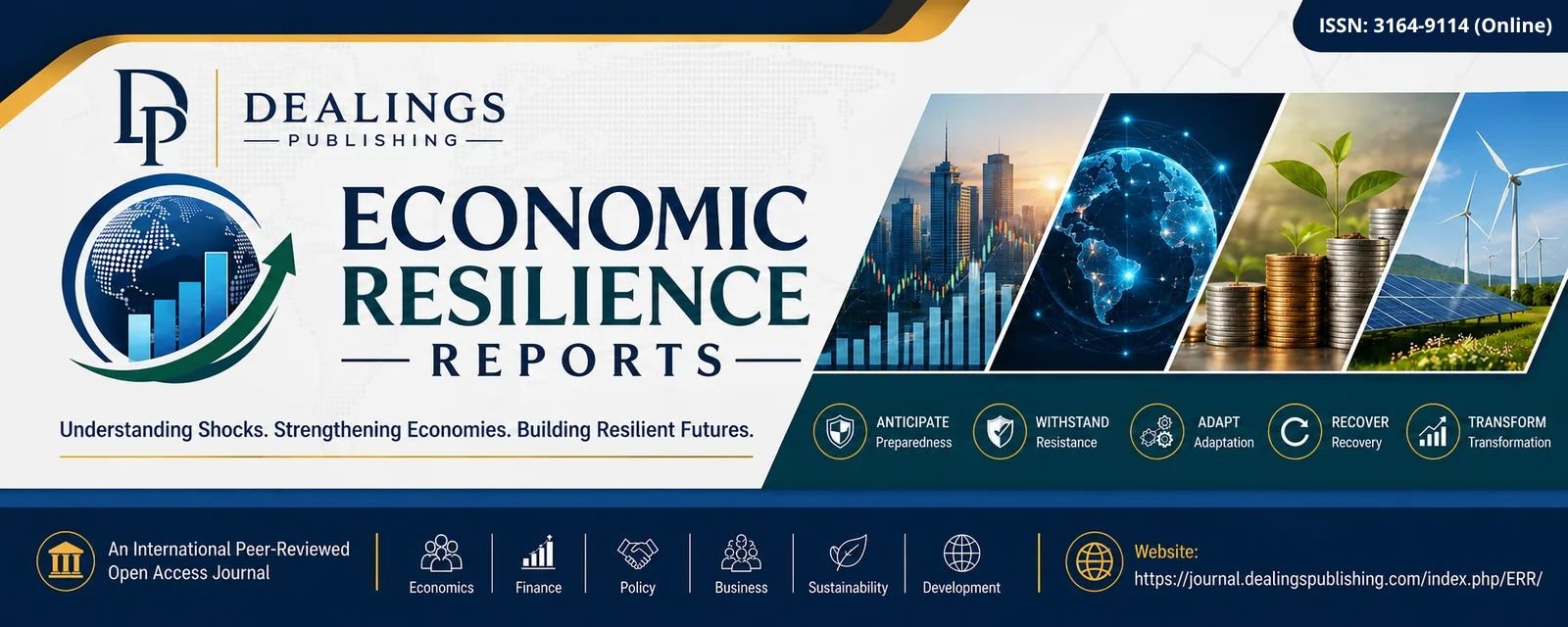
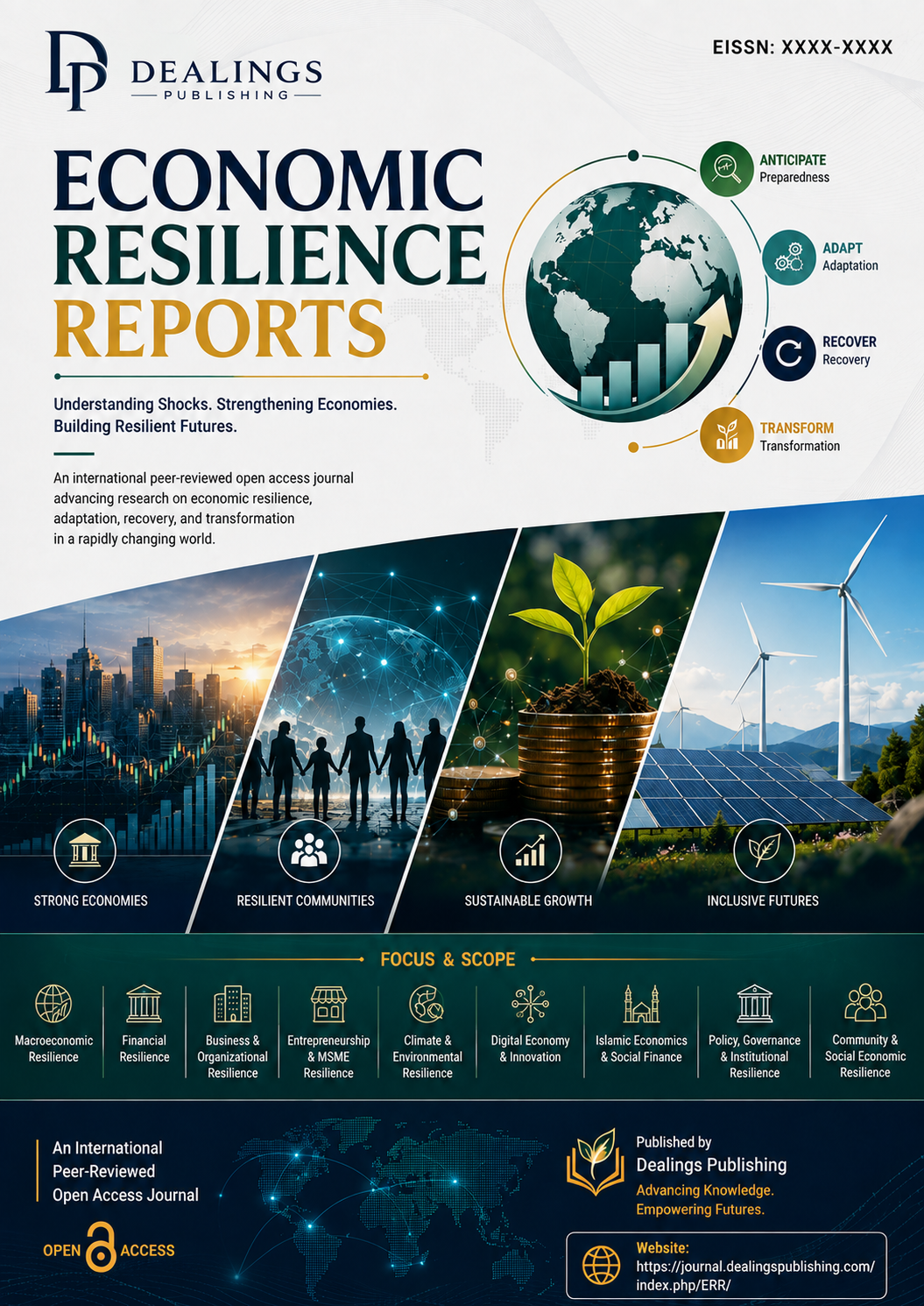
Economic Resilience Reports (ERR) focuses on the capacity of economic systems to anticipate, absorb, adapt to, recover from, and transform in response to disruptions such as financial crises, economic recessions, pandemics, climate change, natural disasters, geopolitical conflicts, technological disruption, supply-chain shocks, inflation, energy crises, and other emerging global challenges.
Economic Resilience Reports encourages interdisciplinary research connecting economics with public policy, governance, finance, business, entrepreneurship, regional development, sustainability, technology, social sciences, and community development. The journal is particularly interested in research examining the interaction between economic resilience and institutional capacity, social capital, innovation, digital transformation, inclusive development, environmental sustainability, and community well-being.
The journal welcomes studies at multiple levels of analysis, including microeconomic, organizational, sectoral, regional, national, and global perspectives. Comparative, longitudinal, spatial, network-based, mixed-methods, and data-driven approaches are especially encouraged where they provide new insights into the dynamics of economic resilience.
Economic Resilience Reports also seeks to bridge academic research and policy practice by publishing evidence-based studies with clear implications for economic policy, crisis management, regional development, business continuity, community empowerment, and long-term sustainable growth.
The journal welcomes contributions from both developed and developing economies and encourages comparative research across countries, regions, sectors, and socioeconomic contexts.
| ..:: Cover Home ::.. |
| ..:: ISSN ::.. |
3164-9114 (Online)
| ..:: Journal abbreviation ::.. |
Econ. Resil. Rep.

| ..:: Template ::.. |
Organized/ Organizations by in partnership with:
|
Dealings Publishing |
 Fakultas Ilmu Sosial & Ilmu Politik - Universitas Islam Riau |
Jl. Lamping, Pasteur, Sukajadi, Kota Bandung, Jawa Barat 40161, Indonesia
Email: abdillah@dealingspublishing.com / itdhiel@gmail.com

This work is licensed under a Creative Commons Attribution 4.0 International License